
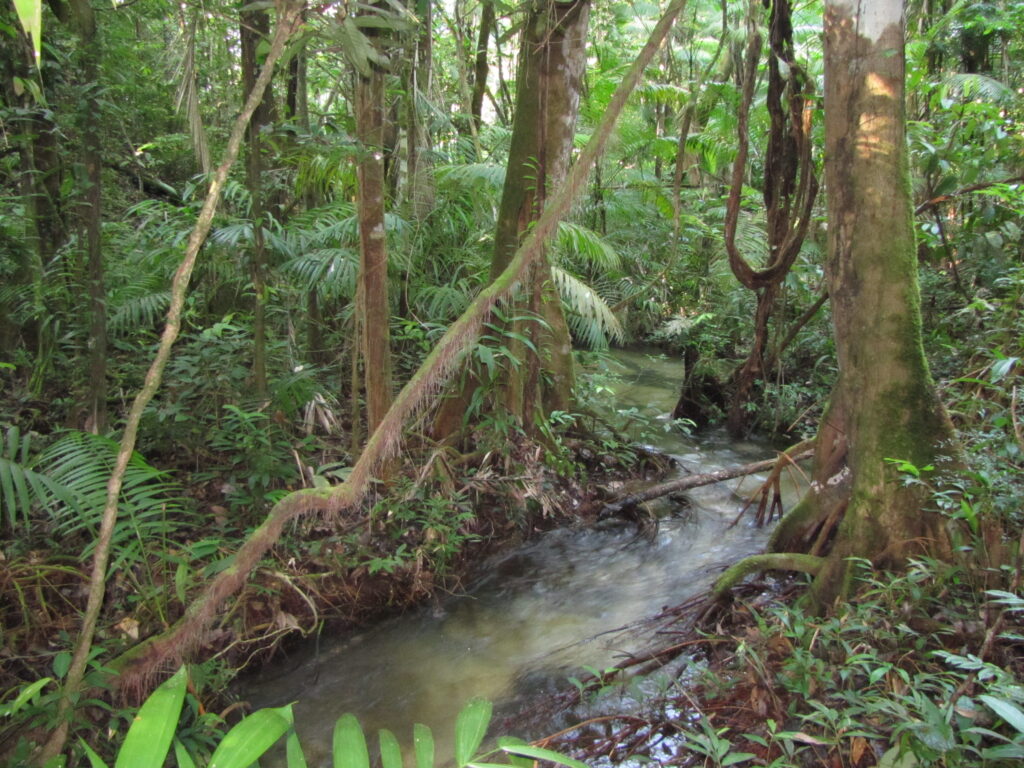
Small streams form the headwaters of all the great Amazonian rivers and provide diverse ecosystem services essential to human health and well-being. They permeate the terrestrial landscape extensively and therefore connect and accumulate anthropogenic impacts in the basin as a whole. Our studies highlight that:
- The fish fauna of streams is very diverse and heterogeneous; species are not evenly distributed across the landscape
- Biodiversity conservation focused on terrestrial species does not guarantee protection for aquatic species..
- Aquatic invertebrates are very sensitive to deforestation and respond to low levels of forest loss
- The negative impacts on biodiversity and the functioning of streams are not only a consequence of deforestation; several other pressures act cumulatively in both the riparian zone and the microbasin.
See more on this topic in Biodiversity and Restoration.