
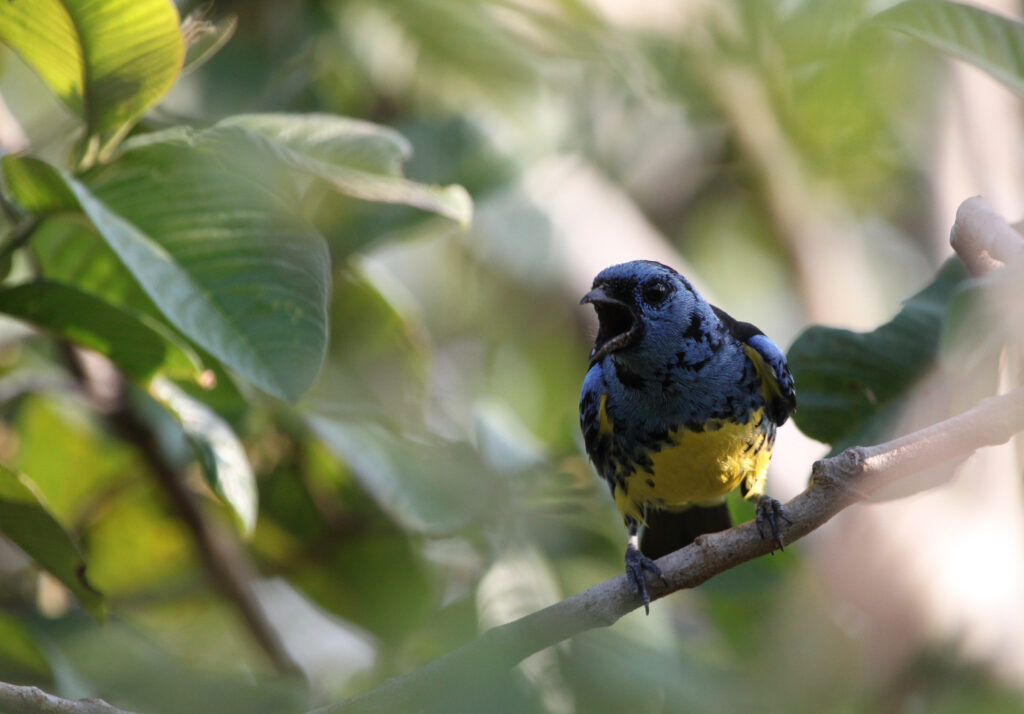
Tropical ecosystems hold the vast majority of the world’s species, and the rich biota of Amazonian ecosystems plays a key role in regulating the climate and enhancing human well-being. Our research on Amazonian biodiversity has advanced understanding of:
- The processes of simplification “biotic homogenisation” and loss of terrestrial and aquatic species in human-modified landscapes, including shifts in baseline biodiversity that have played out across centuries.
- How conservation strategies can be improved by integrating data from aquatic and terrestrial systems and understanding a broad range of ecosystem facets and transitions, including relationships between carbon stocks and biodiversity
- The interactions between different species, and how these influence processes such as seed dispersal by birds and predation rates on herbivorous insects
- We contribute to national and international Red Listing efforts and national park management plans, in partnership with institutions like ICMBio, IBAMA and eNGOs. Our Long-Term Ecological Monitoring programme (PELD-RAS) has been sampling biodiversity for over 15 years, spanning the 2015 and 2023 El Nino dry seasons and associated wildfire episodes.
- We are testing and developing several novel technological approaches to sample biodiversity, including the use of ecoacoustics to monitor bird populations and soil fauna, ingested DNA to assess mammal communities, and environmental DNA to assess aquatic fauna.