
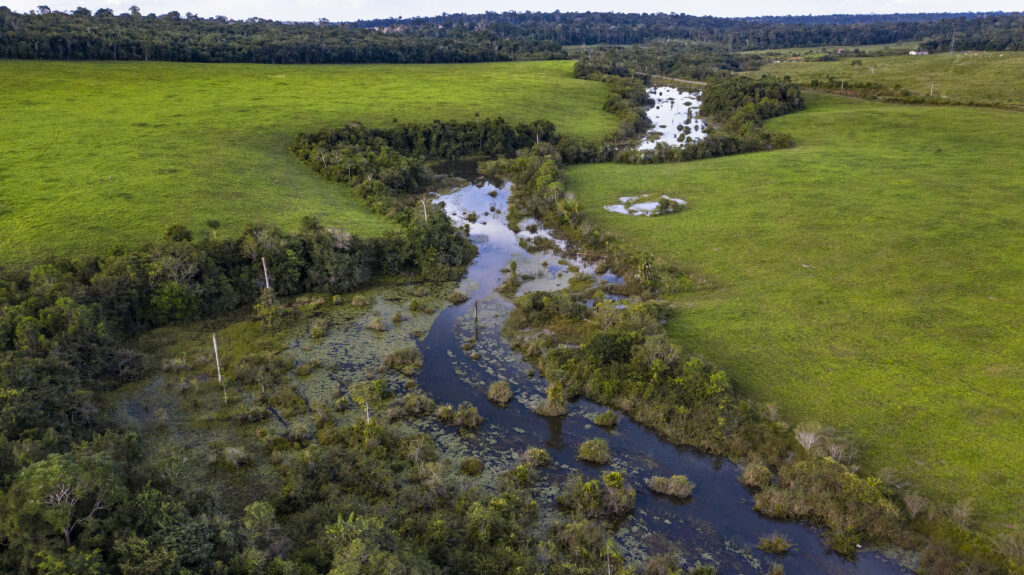
There is an urgent need for large-scale restoration across the Amazon, which has suffered decades of deteriorating ecological conditions and is fragile in the face of climate change. Our research into naturally regenerating forests (secondary forests), has provided key insights into ecosystem recovery in the Amazon, including:
- Regional variation in recovery rates
- The sensitivity of regrowth to climate extremes
- Biomass thresholds governing the return of forest-associated species
These findings have assisted the creation and definition of policies in the Brazilian state of Pará, using evidence-based approaches to delimit successional stages that define protection criteria, and for setting restoration targets to meet the state’s climate commitments.
Currently, we are expanding our forest restoration project work:
We conceived CAPOEIRA, an interdisciplinary center for research and collective learning. Bringing together diverse research networks, institutions, private companies, social movements, and local collectives, CAPOEIRA both aggregates knowledge and supports the co-construction of restoration strategies with greater social, economic, and environmental benefits.
We are currently leading a DEFRA-funded project on ‘Enabling large-scale and climate-resilient forest restoration in the Eastern Amazon’, in partnership with Lancaster University, EMBRAPA, SEMAS, IPAM, UFRA and USP. This work is developing new insights into the importance of secondary forests for regulating local climate, their interactions with forest fauna, and relevance for local peoples. These findings will be used to help guide restoration at scale.